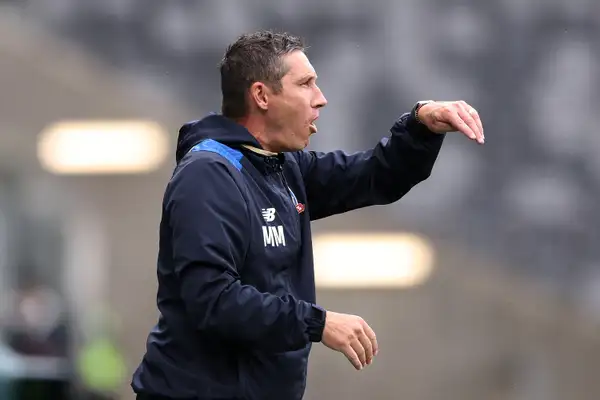
EXCLUSIVE: In conversation with the Argentine owner rebuilding Hungarian club Zalaegerszeg
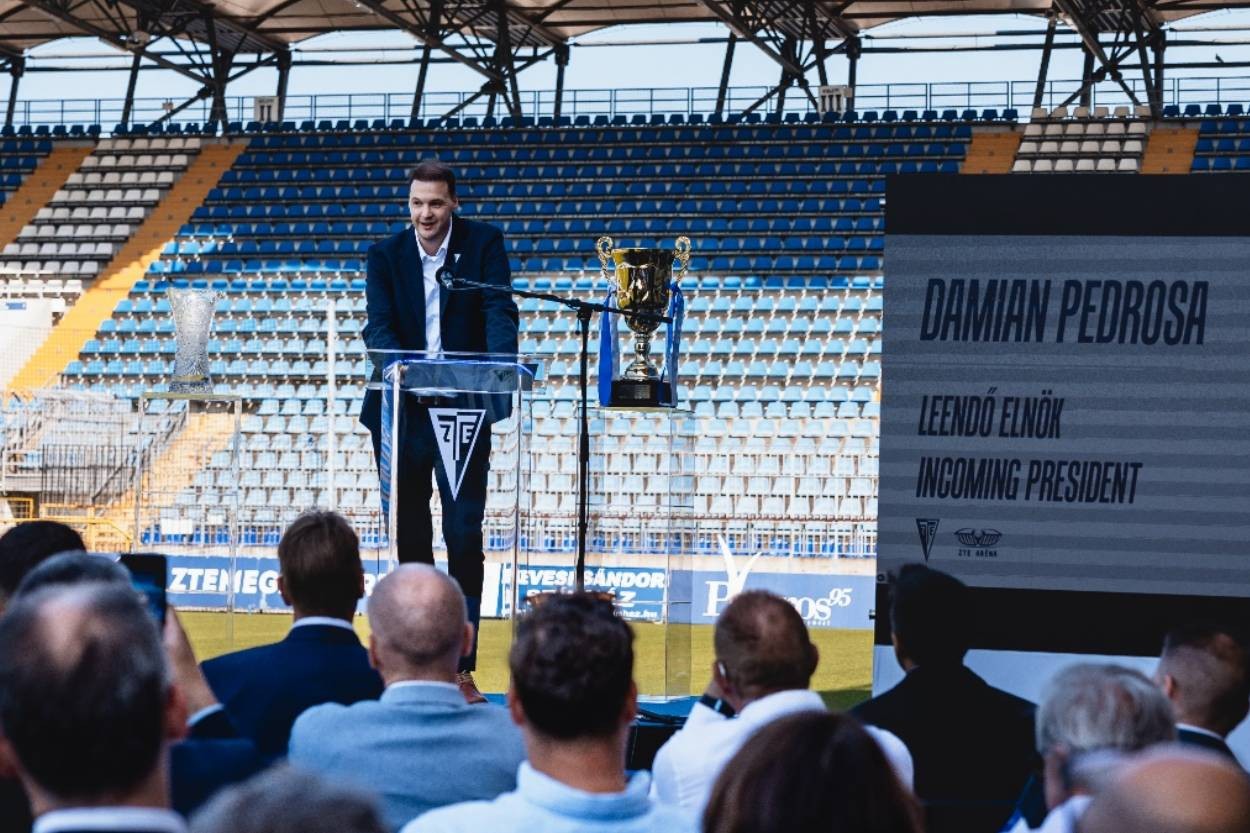
You can listen to the full interview with the Zalaegerszeg owner and find key quotes from it below.
[video alt="Damian Pedrosa interview" credit-line="Flashscore" guid="089b5cbe-c2e0-4b87-b22c-369676967bb9" id="4ace9eb9-2bc2-4045-b1b4-000f010b806a" /][h2]Pedrosa's background[/h2]"My first contact with this beautiful world called football was about fifteen years ago. It’s incredible how fast time flies. We started working at Talleres de Cordoba in Argentina, in my hometown, when a very good friend of ours and a great professional took over the club and put together a team of very young people with whom we began to run the club. It was crazy, a wild ride, everything moved extremely fast. But we achieved all the important goals. I worked there as CEO and Chief Operating Officer.
"The hardest part was that we started our journey in the third Argentine division. And to avoid making this too long and boring for you, within about four years, we reached the first division and even played in the Copa Libertadores. It was a very interesting but also extremely demanding journey. I spent six years there, and then, honestly, I was quite exhausted by that lifestyle, because life at a club really isn’t easy. It’s a 24/7 job.
"That’s why I then founded my own company. We started producing events, and after six or seven months, we were already becoming quite visible, fortunately growing very fast. In Cordoba, we organised many football-related events, and suddenly CONMEBOL, the South American Football Confederation, contacted us... We started producing tournaments of the Copa Sudamericana and Copa Libertadores, which were played practically all over the Americas."
[h2]Why Zalaegerzeg?[/h2]"Honestly, my colleague Andres and I were simply looking for an opportunity to take over a club. We felt that we had the potential to do really good things again in a club environment, so we started looking around.
"First, we looked in Uruguay, because we’re from Argentina and that was the closest option. But those opportunities, honestly, didn’t match our interests. It wasn’t easy to find a club in Uruguay that met all our needs and expectations, so we ruled that out. Then I travelled to Italy several times; we started looking at opportunities in Serie C and Serie B… And suddenly, from one day to the next, the opportunity to take over a club in Hungary appeared.
"At the beginning, honestly, it was a bit of a crazy idea, because for us, coming from Argentina, it was very difficult to even consider a Hungarian club. We didn’t know the league, the country, or the language. So we started studying everything very thoroughly - the country, the football, the league, basically every aspect that could influence this project - and we quickly began to see it as a very good opportunity. A big challenge, but also a huge chance.
"We found a country that is very open to football and has infrastructure that is hard to find even in much bigger European countries. We always say the infrastructure in Hungary has absolutely nothing to be ashamed of compared to the top five leagues in the world, and I’m completely sure about that... We found very good infrastructure, good stadiums, a very good club, a great city, and a league that was going through a period of major change. That was something that strongly influenced our decision."
[h2]The differences between Argentina and Hungary[/h2]"In some respects, the differences are really big. As you may know, in Argentina, clubs do not have private owners. Every four or five years, people vote for who will be the president of the club, and the owners of the club remain the people themselves - the supporters, the fans, whom we call members.
"For example, clubs like Talleres or Belgrano, which are clubs from my city, have around fifty or sixty thousand members who decide every four years who will lead the club. That’s one of the biggest differences between these two worlds, because the concept of an owner is not something we’re used to in Argentina.
"Another difference is, of course, the entire culture around football. We come from Argentina, from an environment that is literally crazy when it comes to passion and football. Those are probably the two main things we perceived as different compared to Argentina."
[h2]Relationship with the fans[/h2]"Honestly, the beginnings were not easy at all. We are the first Argentines - or South Americans - to buy a football club in Hungary, so for local people it was probably a very strange moment. And we understood that. We could empathise with what they were feeling, because it’s not easy when two Argentines come from abroad and start making decisions about a club that local people have been connected to their whole lives.
"But precisely because we are used to running clubs in Argentina with a strong involvement of people, where the club belongs to the fans, people in Zalaegerszeg and in the entire Zala region very quickly understood our vision. We really want everyone to be part of the ZTE club family. We want people to participate in the everyday life and operations of the club.
"And honestly, today we feel very well accepted. People understood our ideas, they share them, and they are very patient. So, considering that it has only been about six months since our arrival, I can say that the way we were received has been truly great."
[h2]Focusing on youth[/h2]"We are a club that is primarily focused on the development of young players. We believe that in the right environment, young players can really make significant progress. We have a coach who is prepared for this kind of work, and in Zalaegerszeg, we are creating an environment that supports that development...
"We want to be a team that is creative, smart in the transfer market, able to identify young talents all over the world, bring them in, develop them, take care of them in every possible aspect, and then, of course, move them on in the market at a moment when the decision is good for all parties.
"And that’s an important thing people sometimes misunderstand - the decision shouldn’t be good for just one side. It has to be good for the player, for the club, and for the owners. And that’s exactly what we are trying to do here in Zalaegerszeg."
[h2]Finances[/h2]"At the moment, we can say that we have one of the lowest budgets in the league - we are certainly among the two or three smallest. But it’s a conscious, deliberate decision. We understood that we don’t need to spend crazy amounts of money to be competitive.
"And I think we’re showing that - currently we are in seventh place and continuing to improve in terms of performance. Our finances, thank God, are becoming more and more stable, which is extremely important for us. Creating a financially healthy club is not easy at all in the football world.
"Today, we can say that we are much more stable than when we arrived. We are more careful, more responsible. We try to keep a low budget and be creative and smart rather than go down the path of reckless spending. We always look for the smartest solution first, and only then move forward. At this moment, our finances are healthy, but always with the mindset of being creative and making the best possible use of the resources we have."
[h2]Recruiting South American players[/h2]"I think that in Europe, some South American competitions are a bit underestimated - for example, Brazil’s Serie B or the Argentine second division. They are often seen as lower quality, but there are many players there who could perform very well in our countries; I mean in Eastern Europe.
"Sometimes I think scouts or sporting directors don’t even look at these leagues, because they say: 'It’s the second division, they don’t have experience in the top league.' But we have brought in many talented players who didn’t have many minutes even in the second division, and yet they perform very well for us.
"And the second crucial thing is to create the right environment for them. Everything is different - weather, language, culture, music - so after you take the first step and accept the risk of bringing in players who are not yet finished products, you have to create an environment here in which they feel comfortable and open to working and improving."
Related News
'It has been unpleasant': Barca president Laporta unhappy about Dro departure
Sergio Ramos reportedly closing in on the purchase of LaLiga side Sevilla
Mamelodi Sundowns goalkeeper Ronwen Williams closing in South African football record